Tuesday, 27 June 2017

Keeping as fit as a fiddle

Keeping as fit as a fiddle

Progress Health physiotherpist, Sarah Upjohn specialises in helping musicians, provides tips on why we could all benefit from improving our posture 

34% of adults and 69% of children in the UK play musical instruments.[1] The sound of an orchestra tuning up before performance brings a sense of anticipation and excitement to any audience. It is the accumulation of hundreds of hours of practice by the musicians brought together by the skill of the conductor. Unfortunately, like many professional and keen amateur athletes, this dedication can result in playing-related musculoskeletal injuries. Young musicians, professional orchestral musicians and conservatoire students can all suffer and, at worst, an injury can mean they are prevented from playing again. 
Sarah Upjohn is a specialist physiotherapist at Progress – The Cambridge Centre for Health and Performance, and Spire Cambridge Lea Hospital and her particular expertise is in treating musculoskeletal disorders through the analysis and re-education of movement and posture.  She uses an analytical approach to successfully treat a wide variety of musculoskeletal disorders.
She believes we should all follow these simple tips and look after our posture:
1.      Be mindful of your posture and position as you sit at work
2.      Aim to maintain symmetry, or return to a position of symmetry.
3.       Let go of accumulating muscle tension, particularly in shoulder girdles
4.       Move from one fixed position (ie sitting at a desk) and do gentle stretches regularly throughout the day.
Sarah’s specialism outside of her work at Progress is helping young musicians at the Purcell School for Young Musicians and for BAPAM (the British Association of Performing Arts Medicine). She has more than nine years’ of experience of treating instrumental musicians.
She explains:
“In basic terms we are all fully aware repetitive strain can lead to injury. It is important we understand the risk factors of any activity we chose to undertake and minimise injury. This is especially true in younger people who spend hours doing the same exercise or practice.  Some sports have addressed this; for example, rowers have two oars until they are 15 years old when they can row sweep (one blade) and ballerinas cannot use pointe until their feet are fully grown. There are no such measures in music and as musicians often play or practise for between two and seven hours a day, they are at risk from acquiring playing-related injuries, which, with appropriate care, are mainly preventable.”
Sarah supplies some tips to keep people playing longer. 
1.       Increase playing time gradually
2.      Introduce a new repertoire gradually
3.      Be aware that stress can produce tension in muscles, increasing the workload that the muscle is doing
4.      Remember to adjust stands and supports as the child grows
5.       Do not add additional stressors immediately after a growth spurt when children are particularly vulnerable to soft tissue injury
[1] ABSRM, 2014


[1] ABSRM, 2014

Friday, 3 March 2017

Preparations going well for Cambridge Half Marathon - 5th March


What a difference a competition makes

Preparations going well for Cambridge Half Marathon - 5th March


Lauren Thomas from Ely will be running the Cambridge Half Marathon this year. She was a Spire Cambridge Lea Hospital and Progress competition winner back in October, beating over 2500 other athletes to £1000 of physio and training support and shoes from the running shoe sponsor Saucony.

We caught up with Lauren in the final days of preparation.

Why enter a competition?

“I’ve been running for seven years and entered the competition because I’m known for signing up to events but then letting my anxiety get the better of me. I’m not good in crowds and find the final hour leading up to a start, surrounded by all the participants absolutely agonising. I thought some support might help.

I did my first half marathon in 2011 and did the Cambridge half marathon in 2014 and 2015, but not in 2016 due to injury. I did enter the race last year, but dropped out because I hurt my back three days beforehand. My anxiety had also gotten really bad. It was such a blow to my confidence.”

How do you engage with Progress?

“I started seeing Lauren Bradshaw, a sports physio at Progress, last November, initially for an assessment and review of previous injuries and my running technique. She gave me a programme of exercises and then I saw Matt Matcham, the strength and conditioning coach at Progress, who gave me a strength programme to follow.

The team at Progress talk through with me what I’m trying to achieve and tailor programmes to suit me, which you don’t get from a website or app. Even though you can get some great advice online, I wouldn’t recommend trying to understand an injury without seeing a professional in person. Just because you have a pain somewhere doesn’t mean that’s where the problem is – I’ve learnt that the hard way!

One of the most important things to get assessed when considering long distance running is your running technique - without that, the potential for injury is massive.  You can either be heel striking or flat footed. Lauren found that I was too high up on my toes which was making me a bit ‘trotty’ - I needed to bring my foot down a little bit more, which we have been working on.”

Has it helped to work with Progress?

“The best thing about the advice and support I’ve been given has to be the bespoke, tailored programme that is developed. If you are going to commit to doing it properly, you are going to push yourself a bit harder and you need that support around you. Thanks to the programmes they’ve given me my core is noticeably stronger and I feel like my legs aren’t tiring as much on the longer runs.

I’ve also been working on the anxiety a lot with the help of Lauren and Hannah Crighton a sports massage therapist. They help with the mental as well as the physical preparation for the big events – we chat a lot and they really understand as they both compete themselves at a very high standard.”

How are things going now?

“The running has been going well. I’ve been doing my strength work (a programme drawn up by Matt) alongside weekly interval training and mid-length runs (around 10k) and weekend long steady runs. I run with the Ely Runners which provides great support in training, and I also have a running coach who likes to put me through my paces! I did 11 miles on Saturday which I plan on being my last long run before the half marathon itself.

Training has generally been good - thanks to Hannah and Lauren my foot has been niggle free since the start of training back in November/December. My lower back has been complaining a bit about the increased distance so I saw Hannah yesterday and she gave me some active stretches, and I'm seeing her again first thing on Thursday.

In addition to Lauren and Hannah giving me advice on the physical side of running, they've both been so brilliant at talking through the mental side of running - I feel like I've reached an epiphany in the last couple of months, whereby I've decided I don't care about my times. 2017 is the year where I fall in love with running again (cheesy I know, but totally true)”.

What are your future aspirations?

“I am only 34 and in distance running terms that’s quite young. I just want to enjoy running again after the injuries and anxieties of the past. I want to move past comparing myself to other runners and just see what I’m capable of when I take the pressure off. I’ve already signed up to some more unusual races in 2017, including joining a team for the “Spitfire scramble”, a 24hr race in London in the summer – that should be a real challenge”.

Lauren Bradshaw, specialist physiotherapist, who has been working with Lauren, mentioned “We have really enjoyed having Lauren as our sponsored athlete. She has been extremely committed and dedicated to everything we have thrown at her and I believe she has come a long way both mentally and physically on our journey together. We would like to wish her the best of luck for the Cambridge Half Marathon and hope that she can enjoy being a part of the atmosphere knowing her body is probably in the best shape it has been in. See you on the start line Lauren!”

Notes:

Spire Cambridge Lea and Progress have given Lauren the option to receive up to £1000 worth of free kit, treatments and use of the Anti-gravity treadmill. She is on twitter as @girlrunninglate and is an active blogger.

Here is an introductory YouTube video about Lauren and how she got into running.


Monday, 30 January 2017

Pelvic Floor Health at Progress, Cambridge

For some people dancing, laughing, coughing and sneezing can all lead to the embarrassment of accidentally leaking urine, but there’s no need to let a pelvic floor problem ruin this festive period.

•       Pelvic floor disorders are known to affect 1 in 3 women and 1 in 10 men in the UK
•       It is currently estimated that there are 3-6 million people in the UK suffering with some form of incontinence

Kathryn Levy is a Women's Health and Postnatal Specialist Physiotherapist at Progress. Kathryn believes people shouldn’t ignore such symptoms as:
•       accidentally leaking urine when you exercise, laugh, cough or sneeze
•       needing to get to the toilet in a hurry or not making it there in time
•       constantly needing to go to the  toilet
•       finding it difficult to empty your bladder or bowel
•       accidentally losing control of your bladder or bowel
•       accidentally passing wind

“These can all be indications of a pelvic floor problem, but there are treatment options available that do not necessarily involve surgery. So do not ignore your symptoms, seek professional advice and be proactive about your pelvic health.”

What exactly is your pelvic floor?
“The pelvic floor is a sling of muscles between your tailbone and pubic bones that help support your pelvic organs, namely your bladder, bowel and uterus. They also help play a role in controlling bladder and bowel continence, so if they sustain trauma, become overstretched and weakened, or overactive and tight, you can develop problems such as stress urinary incontinence or pelvic organ prolapse.”

Who can have problems?
Kathryn explains:
 “It’s not just women who experience pelvic floor problems after childbirth or after menopause.  Both men and women can experience problems for a variety of reasons – your general health, trauma to pelvis or pelvic floor, repetitive heavy lifting at work or in the gym, prolonged periods of standing (nursing or restaurant work), ongoing constipation and/or straining to empty the bowels; being overweight or obese, a chronic cough and ageing. Even young elite athletes (both men and women) who engage in regular high impact activities such as running or heavy weight lifting are at risk for developing problems due to the excessive downward pressure on their pelvic floor muscles.”

Do not ignore your symptoms
“Do not ignore your symptoms. First and foremost, it is important to rule out any medical condition that may be contributing to your symptoms. Depending on the cause of the problem, there are a number of medical and healthcare professionals who can help including: specialised physiotherapists with experience in pelvic floor dysfunction, urogynaecologists, urologists and colorectal specialists to name a few. Discuss your symptoms with your GP or Consultant who can refer you to the appropriate specialist.”

Significant improvements are possible by undertaking a tailored exercise program for your pelvic floor muscles and as well as incorporating bladder and bowel retraining, nutritional counselling, stress management and improving general fitness.

Start now with exercise
Most people do not know how to perform a pelvic floor muscle contraction properly. First you need to find the right muscles.

Lie on your back with your knees bent and feet hip width apart. Inhale to prepare. Exhale to lift your pelvic floor first by closing around your back passage like you are holding back wind, and then towards the front like you are holding back water. Try and hold that lift for 10 seconds. Relax completely and then repeat 10 times. Make sure you do not clench your buttocks or thighs and do not hold your breath.


You can progress this exercise to sitting or standing.

Friday, 11 November 2016

From laser beams to Unicorns and something about a £50 note!

Laser Beams an Unicorns are not the first things that would come to mind when you think about physiotherapy. Our competition winner Lauren Thomas has just had her initial assessment with our Specialist Physiotherapist Lauren Bradshaw at Progress.

The initial assessment included biomechanical analysis with a specific focus on running. This included movement screening and strength endurance of major muscle groups required to run efficiently.

You can see how Lauren got on with her plank and her side planks, which included the good side and the wonky!
We speak to Lauren about how she feels about being our athlete and a little bit of her running history here.

If you are starting your training plan and want some expert advice from Lauren or any of the team at Progress call 01223 200580 to arrange an appointment.


Friday, 21 October 2016

“When is a niggle not a niggle?”

Cris Kellet, Physiotherapy Manager at Progress, Cambridge looks at a frequently asked question,


When is a niggle not a niggle and should I just ignore it and carry on or should I get it looked at by a specialist physio?

We need to find the middle ground between being hyper-attentive to every nuance of our body or ignoring it completely and just pushing on.  As with many things in life it’s a continuum.

Here are some practical points that would indicate when you need to seek help:
1. Is the pain > 3/10? (on a scale 0-10, with 10 being the worst pain possible)

2. Has your pain occurred more than 3 times?
3. Does your pain last more than 4 hours or is it present the next day on weight/load-bearing?
4. Does your pain make the affected area feel weak?


If you answer YES to any of these questions then you should seek an assessment one of our team at Progress who will be able to identify the problem and either treat it or plan further management.  If you answer YES to more than 1 question you should do this soon.


Early prevention or intervention can save you a lot of lost training/competition time and ensure you enjoy your activities and perform at your best.


To book an assessment with one of the team please contact us on 01223 200580

Thursday, 20 October 2016

At the heart of CUCBC’s road to the 2017 Boat Race
______________________________________________________________________________

Cambridge University Boat Club gathered at Progress for hi-tech Cardio Screening

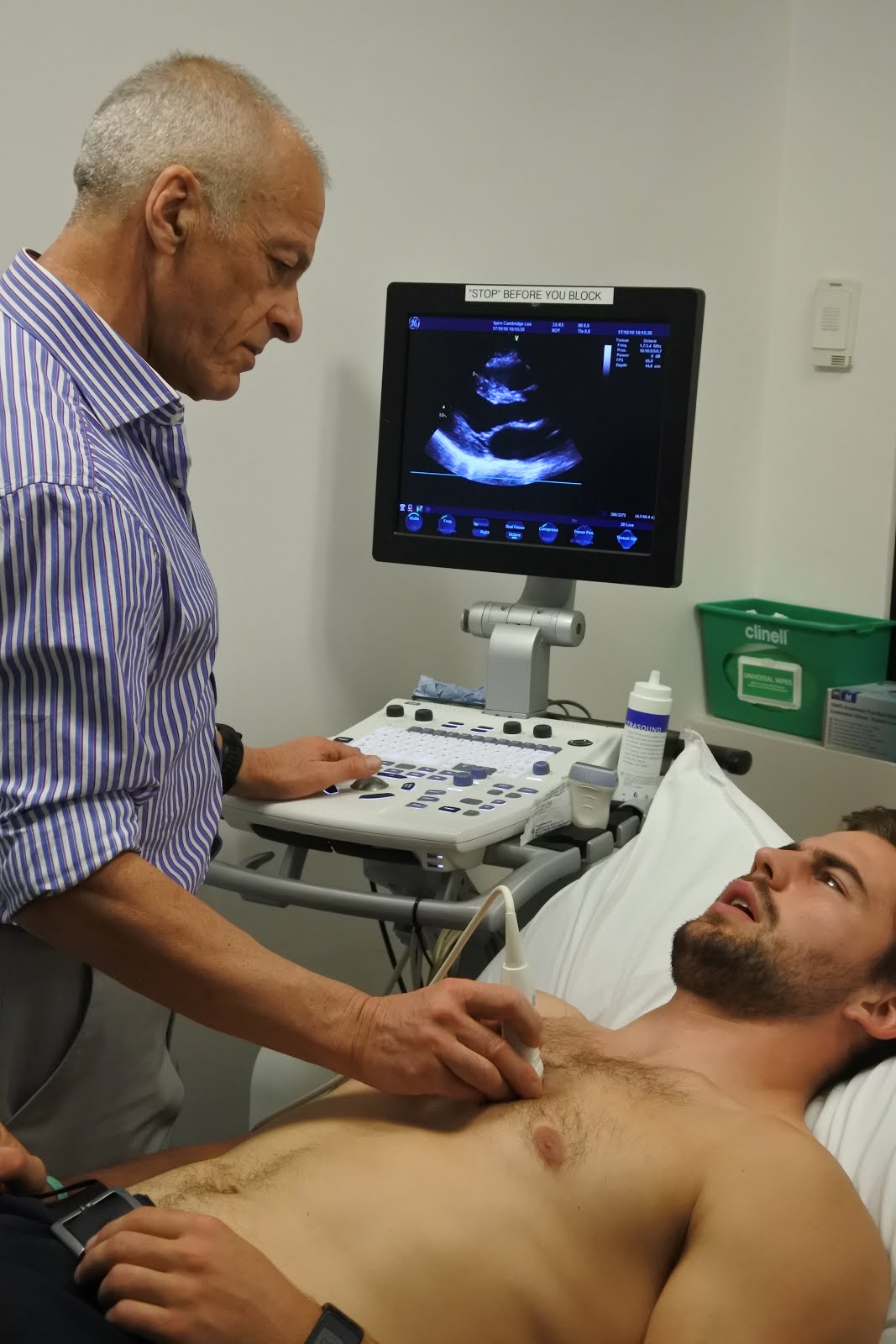
Cambridge University Boat Club (CUBC) undergo heart screening with an ECG and Echocardiogram at Progress, The Cambridge Centre for Health and Performance.

Dr Leonard Shapiro, Consultant Cardiologist at Spire Cambridge Lea Hospital, who examined the CUBC team for cardiovascular conditions, said: “We are proud to be part of Cambridge University Boat Club’s journey to the Boat Race 2017 and look forward to beating Oxford on the Thames”

He continues “ECG and Echocardiograms are not just for elite athletes as they can be very useful to everybody offering diagnostic information to help  show any damage to the heart muscle”

Helping to ensure the athletes representing Cambridge are fit to handle the rigors of rowing for such a prestigious team, these advanced tests can assist in identifying undetected cardiovascular conditions, which are sometimes found in the healthiest of sportspeople. 

Leading the health programme is CUBC Team Medical Officer and member of the British Rowing Medical Panel, Dr Simon Owens. “The BNY Mellon Boat Race is a high profile event that pushes athletes to the limit of their endurance and cardiovascular screening is an important issue. We have worked together to develop this wonderful programme and we are very grateful to Dr Shapiro for his great expertise and to Progress for their excellent facilities in helping us to look after out athletes”

Following the team screening, Dr Shapiro reported that the strong hearted men were all fit for the challenges ahead. And for those keeping count… Cambridge currently lead Oxford with 82 to 79 wins.

For more information on our Cardiology services that are available at Spire Cambridge Lea Hospital click here.

Monday, 4 July 2016

Wimbledon 2016 - Progress physiotherapist looks at common tennis elbow and other tips

It’s Wimbledon again and we naturally get inspired to get out there and start smashing winners!  If we don’t do this on a regular basis though, our over-enthusiasm could just lead to muscle and joint injuries.

The most common of these is ‘Tennis Elbow’, which as some of you might have discovered does not necessarily involve tennis! This is a pain on the outside of the elbow and is usually associated with overuse, resulting in a painful tendon. Other injuries may involve the shoulder, knee and ankle.
How do we avoid these and enjoy our court time?

The most effective way to do this to do a warm-up that involves the movements that you are going to be performing when you play; avoid deep, sustained stretching as there is now evidence suggesting that not only does this not reduce the risk of injury, but it may also reduce your chance of playing well.

The warm-up should start with light jogging followed by brisker sprints. Shoulder movements overhead, across the chest and ‘windmills’ will help prepare your shoulders. You’re now ready to hit some ground strokes and start moving around the court. Finally, practice your serve with increasing speed and power as you warm-up.

Ok, you’re ready to go. Don’t forget to stay hydrated through your match, not only will you feel fresher, you will reduce your risk of injury and your focus and concentration will last longer.
Enjoy your game!

If you are looking to get back on the court sooner, please contact us on 01223 200580 or email info@progresshealth.co.uk

Thursday, 7 April 2016

Let us help you get back on course

Let us help you get back on course

Here at Progress we have noticed that the temperatures outside are rising and the sun is out making it an ideal time for a round of golf with good friends.

It’s frustrating when you want to get back on the course if you have an achy back, pulled muscle or painful condition like arthritis. You know it may need to be treated or need a medical opinion, but you just never seem to get round to it.

Golf is a game which is now more popular than ever. It is played by a wide variety of the population with varying size, shape, age, fitness and health of players. As a result, when injuries in golf occur, these can potentially aggravate a pre-existing condition such as osteoarthritis or chronic overuse injuries. The majority of golf injuries are associated with a lack of core control, limitations in flexibility or imperfections in the swing, all that twisting and bending can lead to back pain, or even injury.

Being in good physical condition is an important factor to becoming a great golfer. Being out on the green usually means standing on your feet long periods of time and having to walk far distances. A golfer in good physical shape will have the stamina to play a full golf game.

It is never too late or too early to improve your strength and flexibility!

To make an appointment with one of our Physiotherapy team or to find out more, call 01223 200580 or for more information on our other services visit our website www.progresshealth.co.uk


Sunday, 28 February 2016

Post race/run tips

Progress - Post race/run tips. Top tips for immediately after your run 
  • Take advantage of a quick massage today
  • Try using ice to massage any sore areas or an ice bath at home
  • Drink lots of fluids, especially ones rich in electrolytes such as orange juice or tomato juice (now is the time for electrolyte drinks vs during the race)
  • Try to drink at least 180-250mls of water every 1-2 hours
  • Eat something as soon as you can - most glycogen energy stores are replaced more effectively eating within 1-2 hours post exercise.
 Top tips for the following dayYou will be sore - try to keep moving to aid the circulation and reduce stiffness; aim to do a walk or light swim in the afternoon for 20 minutes

  • Eat - replenish those energy stores!! Eat well balanced meals with 50-60% complex carbohydrates to replenish the body's energy stores. Take in adequate protein to repair any tissue damage
  • A long soak in the tub is ‘OK’ today, but ice baths thereafter will aid recovery more for your muscles
  • Rest and get to bed early
 Stiffness and soreness-when to seek helpDeveloping stiff and sore muscles after a hard run is normal and is due to a buildup of lactic acid in your muscles. This is called delayed onset of muscle soreness (DOMS).
  • Listen to your body - over the course of a few days post run, these aches and pains should slowly subside and can be aided by light stretching, sports massage, ice baths and low intensity jogs
  • Seek expert physio help if after a few days the aches and pains do not seem to be subsiding or are increasing
 Planning the next raceAfter you've completed this event, try to think about your running in terms of a reverse taper. It is recommended to take 2-3 days off during the last week leading up to your run, so do the same thing the week after.
Then, if you are an experienced runner, start doing whatever feels good, but even the most seasoned of runners probably won't be ready for a long run right away.
Beginners, if you have been bitten by the running bug, start looking for your next race, but give yourself enough time to recover from this one.  Be careful to build up your training intensity and mileage steadily. If in doubt seek expert advice. If you have any questions regarding the above please contact our team on 01223 200580


x

Wednesday, 10 February 2016

Team GB Mogul Skier and Olympian shares secrets of how to care for your joints as you ski this winter

Team GB Olympian treated at Progress, Spire Cambridge Lea Hospital

Athlete and experts share tips on how to avoid injury on the slopes in 2016


Cambridge athlete, Ellie Koyander is a Team GB Winter Olympian and competes in the ultimate extreme winter sport – freestyle mogul racing. She is in peak fitness and competes at the highest levels of international sport, finishing 2nd overall in Europe last year. She gained seven podium positions on the European Cup Tour and is currently pushing herself further in 2016 for the World Cup season.

Ellie explains: “My discipline can be very grueling on the body, especially when things don’t go as planned. It involves skiing against the clock through a course of icy, bumpy, terrain (the moguls) whilst also pulling ‘tricks’ such as a 360 or backflip off the two jumps in the middle of the course. The ever changing weather conditions and snow consistency can quickly change from bullet-proof ice to sloppy, slushy snow which can all make for some spectacular crashes at any moment, but unfortunately this may mean injuries too.”

Ellie was recently treated at Progress, the Cambridge Centre for Health and Performance, Spire Cambridge Lea Hospital, by Specialist Sports Physiotherapist Lauren Bradshaw.

As Ellie continues: “Lauren has helped me through both shoulder and back injuries as well as other niggles that I’ve had along the way. Being able to work with someone who understands competing at the top level is ideal. Lauren always goes out of her way to make sure I’m feeling as good as possible and know the next steps I need to take. The facilities that they have at Spire are also top of the range and it’s a very professional and friendly clinic, I can’t thank or recommend them highly enough.”

Lauren is not only a physiotherapist but is also an elite athlete in her own right, competing in Iron Man competitions and triathlons. She was an international skater before training as a physiotherapist and becoming the youngest physio for Team GB at the London 2012 Olympics. Lauren clearly understands the pressure of competing and staying fit mentally as well as physically.  “As I continue to learn about my own body and the injuries I experience, it helps me to be more empathetic towards my patients and athletes and to better understand their issues”.

Whilst we aren’t all skiers of Olympic standard, if you are considering a ski holiday, try to avoid injuries this season. The most common seen by the team at Progress includes:
Anterior Cruciate Ligament rupture (ACL) of the knee; Meniscal (cartilage) damage and wrist sprain injuries, mainly for snow boarders.

To reduce the risks of accident and injury at any level, following a ski fitness program before you go away is vital.

“At Progress we offer a Snow active assessment where I examine your current fitness and strength abilities in relation to snow sports. This enables me to create a unique and bespoke pre-habilitation program to help build muscular endurance and control”.

Here are a few simple exercises from Lauren that anyone can do. They promote core strength and promote muscle groups:

Ski sit – either with your back flat against a wall and knees bent to 90 degrees or with a swiss ball behind your back up against a wall – hold a static position for 30 seconds and increase the time to increase the challenge

Swiss ball squats - put the swiss ball in the hollow of your back up against the wall and use the ball to perform a squat. Repeat 3 x 20 repetitions

Single leg balance on a cushion/wobble board – can help to improve dynamic stability at the knee joint - aim for 3 x 30 seconds on each leg. Increase the challenge by closing your eyes!

Front plank – keep your elbows under your shoulders, tight squeeze of the bottom muscles and core and hold the position for 30 seconds increasing to 90 seconds. Repeat x 3.

“Try to repeat these exercises 2-3 times per week for 4-6 weeks on the run up to a ski trip in order to ascertain sufficient changes!”

And if the worst comes to the worst and you do pick up an injury, it’s important to seek professional help when you return, as Ellie has:

“It’s been fantastic to work with Lauren at Progress, she has helped me enormously through both injuries”

Ellie Koyander 
Ellie is the GBR No.1 Female Freestyle Moguls Skier and currently competes on the FIS Freestyle Moguls World Cup (highest level).

Ellie competed at the 2010 Vancouver Winter Olympic Games at the age of just 18 taking on the most experienced and elite athletes that the world has to offer.  Originally a slalom racer, she always had a talent for moguls where the discipline requires not only full out technical skiing, but also gymnastic precision in the air. Moguls is the only freestyle discipline to combine 'tricks' with racing flat-out against the clock.

Ellie follows the snow around the world throughout the year, training throughout spring and summer in the USA and Chile. Ellie is now working towards the 2018 Winter Olympic Games in PyeongChang.

Lauren Bradshaw – Specialist Sports Physiotherapist
Lauren graduated with a degree in Physiotherapy from the University of Nottingham in 2005. She later completed a Master’s degree in Sports Injury Management at Sheffield Hallam University in 2015. She has worked in Private Practice but predominantly within Elite Sport. Lauren spent 4 years working as the Great Britain Handball Lead Physiotherapist on the run up and during the London 2012 Olympic Games. Lauren is still a contracted Physiotherapist for Great Britain Diving, Boxing and Bobsleigh squads and spends time looking after athletes competing and training across the World.

Friday, 22 January 2016

Half Marathon Training Tips - Some Finishing Touches.

As we approach the Cambridge Half Marathon the team at Progress have some tips to help you with your training.

The half marathon is an endurance race therefore it is really important that you do increase your mileage and length of your ‘long run’. If you are too busy and fall behind your schedule do not do double. Instead catch up slowly and ‘Listen to your body’.

Here are some tips to help you with your final stages of your training.

Finish each session with stretches of all major muscle groups. This allows the muscles that have been worked to return to their normal length

Run relaxed. The more relaxed you are the easier it is to run. Try to self-monitor how your body feels. Try to recognise signs of tension and let it go. Breathe slowly. Hold your shoulders low. Loosen your hands allow your arms to swing in the rhythm of your running. Smile it will help to relax your facial muscles.

Rest is essential for recovery. Schedule one day a week when you do no aerobic exercise. This will allow your body to adapt to the increased training load and help to prevent injury. Ideally you should aim for 6-8 hrs sleep a night. Try to schedule your training so that you cut down your training as the race day approaches.

Decide what clothes and shoes you want to race in. This allows you to find out if your clothes rub or if your shoes will cause any problems. Socks are very important so make sure they fit properly and have been washed this will help to prevent blisters on race day.

Be consistent. Learn to run with good style. Practice running drills this will help to develop running economy so less energy is used when you run.

Ensure adequate nutrition and hydration. It is important to replenish water and electrolytes during and following exercise to minimise dehydration, stabilise blood volumes and avoid muscle cramps. After you exercise eat some carbohydrates to replenish your glycogen (energy) stores. Protein will also help to repair any tissue damage. Ideal is a milkshake.

Race Day Food .Experiment what you can eat before your long run. Find out what works for you and how long before running you can eat something. Practice exactly what you eat on race day to avoid any abdominal discomfort.

Plan your Race. Be realistic on race day you will have adrenaline racing around your body so it is very easy to start too fast. Practice in your training what pace you can run easily at. It is easier to start slower and build up. Familiarise yourself with the course. It is a good idea to run some of the course in a routine weekly run.

Good luck in your training and race from all of us at Progress. 


Wednesday, 16 December 2015

Progress donate Advent Box to WinterComfort

This Christmas the team at Spire Cambridge Lea’s Physiotherapy centre Progress have all joined together to gather a food box for Wintercomfort. Wintercomfort is a charity that supports homeless vulnerable housed men and women by offering them vital welfare service and opportunities for learning and development.  Cristopher Kellett, Physiotherapy Manger, said “as a team here at Progress we are always happy to support a local charity especially at Christmas and Wintercomfort is a very worthy cause, the team have all come together to bring food items in for the advent box which we look forward to taking to Wintercomfort. From all of the team here we would like to wish them a Merry Christmas”

Thursday, 26 November 2015


4 time Ironman champion Lucy Gossage takes to Alter G at Spire Cambridge Lea 

This month local Cambridge triathlete dropped into Progress Physiotherapy Center at Spire Cambridge Lea to use our Alter G treadmill to help her in her final stages of her recovery after injury at the end of this years season. Lucy said "I feel so lucky to have been given the opportunity to use the Alter G to gradually build up my running over 10 days or so. Rather than rushing things I could test out my injury by gradually increasing the % body weight i was running. And that meant that my fourth run on the road was a pain free half-marathon (albeit a slow one!)'


Friday, 2 October 2015

Ironman Mallorca Race Report - Lauren Bradshaw

So it's now 5 days since IM Mallorca and I've had a little bit of time to reflect on the race so here are my thoughts...

Back in 2014 I decided after spending some 6 months going out with and living amongst experienced Iron'men' and 'women' that I couldn't be the odd one out so decided to enter IM Mallorca. A place close to my heart after meeting Tom there on training camp in March and spending multiple holidays with my family over the years- this had to be the one.

Arriving in Alcudia last Wednesday to pouring rain and grey skies was not the glorious weather I was expecting but true to form the sun came out and the sea glistened.

As race day approached I could feel my body 'preparing' itself in a way I've not noticed before. Wanting extra sleeps, needing extra food and then going to the loo more times than I could count on 1 hand (sorry!). Whether this was to do with the horrid antibiotics I had been taking for a recent tooth infection or just my body ridding itself and getting me to race weight who knows but I was feeling ready.

I went out with a friend from my previous Tri club in Nottingham to reccy the bike course and was feeling good. I also swam a bit of the swim course and it felt like a warm bath so we thought it'd almost definitely be non wetsuit. To our surprise at race briefing they announced it was borderline so you could choose! After consulting Dr James Gill (master of swimming and recent Kona qualifier) he said I should definitely wear my wetsuit. So that I did.

Race morning arrived. I was nervous. Really nervous. It felt so daunting that I would cover more distance and be exercising for more time than I had ever done before. Seeing the thousands of silhouettes/athletes descend upon the beach as the sun started to rise was pretty special. With the new rolling swim start I put myself in the 1.15-1.29 pen. The swim consisted of a 2.4k loop Australian exit then a 1.4k loop. The swim went perfectly and I amazed myself when I exited in 1.11. A long transition and I was out onto the bike course.

Again after words of advice from the 'pros of IM' I took the first 90k steady and It felt really easy and time passed so quickly. I came in under 3hrs so was more than happy with that. Knowing the 2nd half of the course involved the Lluc climb and a headwind I knew things would get tougher. At 110km my guts weren't feeling too good after a million gels and other caffeinated products so I backed off a little, took on water made the climb nice and easy and then got myself together for the final stretch back home and came in just over 6hrs so again pretty pleased with that!

Now I new that despite the run being my strongest discipline it would be the toughest on the day. I wasn't wrong. A 4.5 lap course makes for some real psychological battles. I made the most of walking through each aid station soaking myself with sponges, ice cubes, cups of water and taking on some sort of fluid/gel/fresh orange. I didn't set myself too much of a target for the run other than try not to walk anywhere other than the aid stations. I had no idea what my accumulative time was on my Garmin I just kept looking at my 1k pace and felt happy that I was relatively comfortable. Besides a couple of trips to the god forsaken soiled porter loos I didn't walk and ran the entire marathon in 4.26 and crossed the finish line in 11.57.


As I met Tom in the athlete garden I burst into tears with overwhelming emotion and felt so proud that I came here and achieved more than we'd both hoped. On the walk back to collect my bike I swore I wouldn't do another but sitting here writing this on the beach 2 days later I've already decided which one I'm doing next!

For anyone reading this that hasn't done an Ironman, contemplating doing one, feels it's beyond them then I challenge you to accomplish something that I still can't quite believe. The Ironman mantra is 'anything is possible'. It really is if you put your heart and sole in it.

Thanks for all the messages of support and to Tom for being there all day and helping me to keep going. It means the world.

Lauren.
Lauren Bradshaw MCSP BSc
Specialist Sports Physiotherapist
Progress Centre for Health & Performance Spire Cambridge Lea Hospital

+447823881522

Tuesday, 23 June 2015

Got a spring back in my step! Summer is nearly here...

Wow…where has this year disappeared to? I cannot believe it is June already but it is so delightful how light the evenings are now and that can only mean one thing in my world….more time to do quality training in glorious (or not so) sunny weather.

So A LOT has happened since my last posting back in February. Way back then I was really struggling with my lower back injury and had not long received my diagnosis of an annular disc tear and prolapse in my L4/5 and L5/S1 discs. I had committed to a 2 hour daily rehabilitation and conditioning regime and was receiving twice weekly treatment to help ease the muscle spasm and mobilise my spine. I want to take this opportunity to thank my manager Cris Kellett for his fantastic efforts in helping to sort me out – without you I would not be able to do what I am doing now – so I am eternally grateful for all those acupuncture needles and deep tissue massages – making me wince like a child!

In retrospect looking back to February/March I believe I was probably coping with my injury the best I probably could. Trying to look at the things I could do, not the things I couldn’t. Don’t get me wrong watching all my Tri-club buddies compete in races and head off on lovely winter bike rides was hard but I feel I have taught myself a lot about being patient and channelling my focuses elsewhere. At the end of the day I was fortunate in the sense that my injury happened during the winter months, out of competition, and so I tried to utilise the time that I would have spent training to do thorough rehabilitation sessions.

My sessions largely consisted of x-training to begin with on the elliptical machine. This machine has similar physiological demands to running but without the impact and actually I always felt much better after having a session on there. These sessions were supported with strength and conditioning circuits to target my core and gluteal muscles as they play a vital role in stabilising the spine and pelvis. I also used the opportunity to get in the pool more – and I must say for someone that generally doesn’t really enjoy swim training, I have seen small improvements and actually enjoy getting up at 6am 3 days a week to throw myself in the cold waters of Impington Village college pool! Recently Open Water swim sessions have recommenced so once a week our club arrives at Milton Country Park to don our wetsuits and get tangled in weeds. Jesus Green outdoor pool is also a fun place to train as it is known as the longest pool in the UK (91m!) and so you can just keep going and going!

Whilst all the sessions in the gym and pool had started to improve things somewhat I was still very much aware of my pain on a day to day basis. Not as severe as in the initial stages but noticeable. I decided to have a review with Professor Cathy Speed to discuss the options and it was suggested that perhaps an epidural injection would be helpful. Now, bearing in mind this was early March and the last week of March I was due on our Cycling and Triathlon club annual cycling camp in Mallorca I had a big decision to make. Do I just keep on with my rehab and see if it’ll settle with time or try to take a helping hand and literally get jabbed in the back with a needle full of corticosteroid and anaesthetic? After much pondering I went along to see Dr Rokas Tamosauskas at the Spire Cambridge Lea who is a Consultant in Pain Medicine and Analgesia and we agreed to go forward with the procedure. In hindsight I am not sure whether the injection or the rehab did the trick but fortunately I was able to go along on the training camp in Mallorca and to my delight complete the entire week. It was by no means pain free or easy but it enabled me to get back on my bike, relatively comfortably and get lots of miles in the legs! I managed to complete a notoriously famous climb and descent on the island known as Sa Calobra which I have wanted to do for a few years now – so was super chuffed that I achieved it.

Amongst getting back on my bike I had also started to do a few sessions a week on the Alter G Anti-Gravity treadmill to start getting back to running again. Because of all the hard work on the x trainer these actually felt relatively easy and by off-loading my body weight at around 80% I felt as light as a feather so I had minimal pain from impact. Over the weeks I gradually increased my body weight back to 100% and whilst in Mallorca completed my first run in over 3 months on the beach front and it was pain free! Happy days =)
Pre injury I had already booked up my events calendar for the 2015 season and as much I was delighted at all the positive steps forward I was making I was still deeply gutted that I had to pull out of a few events. The first being the Cambridge half marathon which is always a great buzz as the city streets are lined with friends and family members and the atmosphere is electric. Second was the European Duathlon Championships in Alcobendas, Spain and after such a great race at Worlds last year it would have been great to put my GB suit back on but I would not have been competitive and therefore was not really worth my while. Instead I decided to build up my mileage and tissue tolerance to load rather than push speed or performance.

In May I took the decision that I would try to race the Belvoir middle distance triathlon. As I had not really felt comfortable on my time trial bike I thought it would be best to ride my road bike. Less aggressive and aero it would undoubtedly cost me time on my bike split but to be honest I just wanted to compete and enjoy the process rather than worry about the result. So rather than rush through transitions I took my time and actually chatted my way around the bike course. Getting out onto the run felt great (despite it involving 4 x 2.5k hill reps!) and I smashed through the field to finish 11th overall and 3rd in my AG. On a high from this race I raced another half distance race called the Outlaw 2 weeks later at Holme Pierrepont in Nottingham. Once again I was without TT bike but improved my bike speed on the last race by over 2kmh. I unfortunately developed an excruciating stitch on the run which slowed me down somewhat and in a very big field of 283 women I finished 30th which I know I could do better but again I was just thankful to compete.

Moving forward I have A LOT coming up! Another half iron distance race called Graffman at Graffam Water next weekend, a cycle trip across the pond to Paris, the long course weekend in Tenby which is the notorious Ironman Wales course split over 3 days, the marathon leg of the Outlaw Iron distance race alongside super pro Lucy Gossage and mega swimmer Helen Gorman, 2 weeks training camp in the Italian Dolomites with my lovely Tom & friends, another half ironman called the Vitruvian at Rutland Water and then my first FULL Ironman race in Mallorca at the end of September! I am ever so slightly anxious!

Outside of triathlon and training I have been beavering away trying to utilise my time to get stuck into my MSc research. Since September 2012 I have been studying for an MSc in Sports Injury Management and the only thing that had stopped me from completion was my dissertation. So alas I got my head down and finished my project which looks at the use of Performance Profiling in physiotherapy. After submission I had to take my final exam which was a spoken viva about my work. Fortunately I did very well and I am pleased to announce that I gained a distinction overall and will have my graduation in November up at Sheffield Hallam University. I am currently in the process of submitting my work for publication so keep your eyes peeled and hopefully in my next blog I’ll have it printed up in a sports medicine journal of some kind.

Alongside cracking on with my research I embarked on a 2 day intensive running course at Lee Valley Stadium with Blaise Dubois, a physiotherapist for the Canadian Athletics team. It was a fascinating 2 days and completely challenged my way of thinking and analysing running. Since the course I have become registered with The Running Clinic (check out the website at: www.runningclinic.ca) as a Specialist Therapist in the analysis of running biomechanics. We discussed the concept of barefoot running and minimalism and the advantages this plays over the use of over bulky shoes when done in a timely and appropriate way. If you are interested in finding out more about the way you run and how you may be able to improve, or are injured and would like to return to running then why not come and have an assessment here at Progress?  We have also received our shiny new Watt Bike Pro which is an excellent way of capturing accurate data to help improve cycling fitness and performance. If you are interested in being tested to find out your Functional Threshold Power (FTP), Maximum Minute Power (MMP) or pedalling efficiency the give us a call on 01223 200 580 or find us at www.progresshealth.co.uk to get booked in.

That’s it for now, hopefully my body will not be completely broken by the next time I write!

 Pictures from my Cycling Camp in Mallorca – March 2015 with CTC & CCC
Me & my best friend Aimee as we reached the bottom of the iconic Sa Calobra
Me, Tom and our housemate Dave
Me & Tom having fun pre ride on the beach front!
My medal from completing the Outlaw half ironman
 31st May 2015!

Our shiny new Watt Bike Pro! 


3rd place in Age group at the Belvoir Half Distance Triathlon May 16th 2015


Wednesday, 13 August 2014

Lauren Bradshaw's busy summer of fun =)

I have to say what a cracking summer we have been blessed with this year. Delightful sunshine makes training so much more enjoyable plus the fact you can build up a lovely suntan =) It has been a rather manic couple of months with some big challenges and personal achievements so here is a run-down on what has been going on in my quest of sporting glory….!


Cambridge Triathlon (15.6.14) – Based at Mepal Outdoor Centre on a drizzly Sunday morning I competed in my very first Olympic distance triathlon. As someone who has predominantly been concentrating on sprint distance races for the last couple of years the step up to Olympic seemed a little daunting (even though I have completed 3 half iron distance races which are even longer). But for some reason I have had a little bit of a stigma for this distance and on race day I was actually quite nervous. Swimming is definitely not my strong point and so I know I will never be first out of the water but rely on my strengths on the bike and then on the run to come into my own. I managed to place 4th female overall and won my age group so was pretty pleased with that for a first time effort – but I think Olympic is probably not my distance as I do not have enough miles to hunt people down on the bike and then the run!

Great Nottinghamshire 100 Mile Bike Ride (22.6.14) – This was my first attempt at a 100 mile sportive and so again was incredibly nervous at what may or may not happen! I have ridden a few 100 mile club rides in the past but they have always been interrupted with a rather lovely cafĂ© stop for some cake and tea and therefore to ride 100 miles straight would be a whole new ball game. Fortunately my Ironman boyfriend who can ride 100 miles flat out in his sleep joined me and suggested that I ‘sit on his wheel’! I was a little dubious about my ability to ‘sit on his wheel’ at 35kmh for 100 miles but was up for the challenge. He gave me advice to take on an energy gel every 30 minutes along with regular sipping from my energy fuelled sports drink and the odd Haribo or 2 and I stuck to this plan religiously. At the 65 mile point I was just about clinging on to his wheel when he unfortunately (or maybe fortunately for me) had a rear puncture and had to stop to fix it. We agreed that I would continue without him and he would catch me up. I was very surprised that for the remainder of the 35 miles I actually rode solo as he never caught me up but he finished not too far behind me and so in hindsight the puncture actually benefitted me as I dropped my speed a little to average 33kmh which probably allowed me to finish the ride as I think I may have struggled to keep the 35kmh with Tom but who knows – we’ll have to try another one and find out! I completed the ride in 4 hours and 54 minutes and was the first lady to cross the finish line. I was over the moon with my time and crushed Tom’s optimistic expectations of me finishing within the 5 hour mark =)


Gog Magog Gran Fondo 80 Mile Sportive (29.6.14) – After finishing the 100 miler I thought an 80 miler would be a breeze but it is a lot different to ride individually than sitting in the draft of someone else. Tom and his super cyclist friends had decided to try and ‘smash’ the course so went off in a pack and worked together at a speed that I would have no chance of maintaining and so I went off alone. All was going swimmingly averaging just under 30kmh on a very hilly course until 60 kms into the ride I hit a pothole and my rear wheel exploded. I ended up having a double tyre blow out and had to abandon the ride as my tyres were ruined and was rescued by the support team and driven home. I was so disappointed that I didn’t get a chance to finish this event but I guess these things happen in our sport and I have to take the rough with the smooth.

Carnival Tour 50 Mile Sportive (6.7.14) – So the Tour de France came to town – how exciting! As part of the build-up celebrations for the Tour coming to Cambridge, Saffron Walden Velo hosted a ride that would encompass part of the actual route the professional cyclists would ride on the following day in Stage 3 of the tour. The weather was actually atrocious the morning of the ride and it was torrential rain for pretty much the entire 50 miles. I managed to overcome the rain and finished as the first lady which again I was delighted with and felt as though I was building on my confidence with each and every ride. A special well done to my dear friends Aimee and Nick who also completed the sportive and helped make the day a lot more enjoyable.


Morzine (10.7.14-17.7.14) – SUPER MORZINE!!!! Training camp/holiday. This was my very first trip to the French Alps and I can certainly say that it will not be my last. What a place. I cannot describe how beautiful it is to wake up surrounded by beautiful scenery like that. Simply breathe taking. Anyway the plan was to use the week to train at higher altitude and also to train on the mountains. The weather on arrival was pretty dismal – grey cloud and A LOT of rain! This persisted for the first 4 days (rather depressing) but we did not let it bother us and so front loaded the week with more running sessions. Running around the stunning Lake Montriond and along the fast flowing mountain rivers and waterfalls makes for some of the best run spots you could imagine and some tough hills too! The sunshine decided to come out and play for the latter half of the week which enabled us to do some great climbs on the bike as descending on wet roads is not advisable as my friend Nick discovered when he had a nasty crash down one of the Cols and shredded a significant amount of skin off his hip (fortunately nothing more sinister than road rash though). The first big climb we did was roughly for 7-8K at 9% gradient and that was my first taster of opening the lungs! The climbs got longer and steeper as the week progressed but I can definitely feel the benefits as my regular Tuesday Chain gang friends have nicknamed me the mountain goat since my return as I can easily accelerate up the Cambridge hills (or lumps) now and leave them for dust!!! We also managed to squeeze in a few swim sessions in the amazing 50m outdoor pool and in the lake (which is fed by the melting snow off the mountains – so yes incredibly cold!) Even with my wetsuit and swim cap I felt like I was developing brain freeze so only managed a 2k swim until I had to get out and warm myself up. Morzine is definitely the place to be to improve your training and I hope that I can make annual visits to further enhance my mountain goatness!

BIG Swim (26.7.14) – Considering swimming is my weakest discipline as a triathlete, I decided I should try to conquer my fears and delve into some murky waters and swim the farthest I’ve ever swam in my life. Therefore I entered the 5K BIG swim at Holme Pierrepont in Nottingham along with my boyfriends’ housemates James and Kathryn (who I must add are MEGA swimmers and could outswim a shark). Once again I was very anxious pre-race partly because I had never swam more than 4 kms in one go before and was unsure about nutrition and whether or not I would cramp in my calves which I have a tendency of doing when I swim for a long period of time. We had to do 2 x 2.5km loops which included a little run between 2 points and thankfully the ability to take a gulp of some fluids before diving back in off the pontoon (my favourite bit!). I had estimated that it would take me 1 hr. 45 minutes to complete and if I achieved that time I would be pleased. I came in at 1 hr. 44 minutes!! Super chuffed and not only that my Garmin computer read that I actually swam 0.5 kms further than I should have (probably because I am not so great at swimming in a straight line) – Bonus time!! I felt very satisfied to have achieved that time but not only that just the feat of actually completing the swim in the first place and it also makes the dreaded ironman swim seem less of a struggle to one day tackle. A huge congratulations to James and Kathryn who both placed 3rd.


Outlaw (27.7.14) – So here I am going to talk about an iron distance race which comprises of a 3.8km swim/180km bike/42 km run… yep that’s right! Also taking place at the National Water Sports centre in Nottingham we had made a weekend of mega racing. Tom had entered himself into his second iron distance race of the year and was hoping for a podium finish and so we had to be there to support him. Ironman distance is not only about the physical strength and stamina required to complete the distance but equally importantly is your mental strength. Having a support team around you can make a huge difference in a race that has a marathon at the end of it and so I intended on being the best support crew any athlete could ever wish for! We made flags, bashed bangers, bells and rattles and we literally chased Tom around the course for a full 9 hrs. and 13 mins until he crossed the finish line in an impressive 3rd place! An immensely proud girlfriend with a potentially celebrity boyfriend who will soon be making his channel 4 debut when he was interviewed as ‘one to watch’!!! (Look out for the highlights show end of August on Channel 4!)


Owler (3.8.14) – After the inspiration I gained from watching Tom finish his race I felt like I needed to up my game a little. I made a rather last minute decision and entered a half iron distance race called the Owler held in Ashford, Kent with less than 2 weeks to prepare for it. Though I know with all the training I had been doing it should not be too much of an issue. However, as seems to be the case this year with any big race I aim for I developed an awful tooth infection that left me with many sleepless nights and A LOT of pain on the run up to the race. So much so that I almost withdrew. However, the determined part of me decided to give it a go and try to tackle each section as I came to it. Funnily enough as soon as the horn went to start the swim my tooth pain disappeared and the adrenalin kicked in and so I was able to complete the entire event – yey! Even better when I finished in 5 hrs. and 8 minutes as 2nd lady overall and won my age group. Even better still I won a medal and a mug and a t-shirt with an owl on – and anyone that knows me well knows that I LOVE owls! Lesson learned from this event: DO NOT GIVE IN. Pain is temporary =)


Thursday, 12 June 2014

Lauren's good news!

So it feels as though summer is finally here – well almost – this changeable weather keeps teasing us and especially those of us that tend to ride our bicycles quite a lot! On my last update I talked about the fact that I have had a rather unfortunate start to 2014 with various illnesses and that I was about to compete at the 2014 European Duathlon Championships so here is my race report…


On Friday 11th April a big bus load full of Cambridgeshire based Duathletes and their respective partners, parents and avid fans embarked on a road trip across the channel to Horst in the Netherlands for the 2014 European Duathlon Champs. We all managed to find accommodation based in Center Parcs in Horst which was an ideal base for the race.

The race consisted of 2 distances the long and the sprint. I raced in the Sprint distance in the female age category 30-34 (my first race in this age-group). I knew that I didn’t have the ideal preparation for this race and so decided that I was going to concentrate on enjoying it and not get too hung up on my final result. I was confident that I could put in a good bike performance but that my run would be what suffered the most and this held true. I finished in 8th place (a little disappointing as I was 6th last year – but in a differe
nt age category so a bit tougher this year) but on analysis of my overall time I was only 50 seconds down on last year’s race and therefore cannot be too down hearted about it. As I mentioned in my last blog I had the Worlds to try to get fit for and so that was my new aim. Just get fit!


A part of me ‘getting fit’ involved my BUPA health check that I receive as an employee of Spire Healthcare. It revealed that I have the lung age of a 58 year old (which was assessed through basic peak flow measurements) and as you can imagine as an athlete this came as quite a shock! It does however explain why I have been under-performing and not feeling well and it was suggested that I have what is called Post Viral Asthma. Blood tests and X Rays came back clear and actually with some extended rest, I have not as of yet had to take any medication and think that I am starting to come out the other side.

During my ‘rest’ period I was very fortunate to be invited out to Canada to be the Physiotherapist for the Great Britain Diving team that were competing at a Grand Prix event in Quebec. This was a great opportunity to work alongside some of our Olympic athletes and future hopefuls and the first time I have worked with Divers in a competitive environment and they certainly kept me busy poolside! I managed to squeeze in a few quality run sessions (that were actually along the run route of last year’s World champs that were held in Ottawa) and my data revealed that I was indeed starting to pick up my pace which was encouraging.

As I continued to feel better, I upped the training a little and took part in a sprint triathlon back home in Nottingham at the beginning of May. I raced well and felt as though I was starting to get back into shape and ended up winning my age group and was 5th female overall. This gave me confidence that only a few weeks out from Worlds my performances were starting to pick up. Throughout this time I must give a special mention to my boyfriend Tom Vickery who I must say has been a true inspiration and a real driving force in improving my performance. He very kindly bought me an amazing Garmin triathlon specific training computer that basically tracks my every move whilst swimming, cycling and running and has been very interesting to analyse my training and racing and is really helping me to up the ante. This data can be uploaded to an App called Strava that most competitive triathletes/cyclists/runners use to keep an eye on their statistics and follow other athlete’s daily training (it is like the Facebook for athletes!). You can follow us both on the App if there are any avid Strava fans amongst you!


So next stop –2014 World Duathlon Championships, Pontevedra, Spain. I had a lot to prove to myself at this race. 2013’s Worlds I had food poisoning so had an awful race and after this year’s Europeans wanted retribution! And I got it. I managed to finish in 3rd place in my age category and 8th Female overall out of 175 women. This is my first international medal and I feel so incredibly proud to own it! I had an amazing race, recording a Personal Best performance and had the quickest bike split in my age group which I am also incredibly chuffed with as I have been working really hard on the bike. I can now see where I need to improve – need to get quicker at running and especially running off the bike but it felt so good to be fighting for a medal – it felt like a proper race! Because of my placing I have pre-qualified for next year’s World Championships in Adelaide, Australia which will be amazing! Need to go for Gold now =)

So what’s next…. I have the Cambridge triathlon in 2 weeks which will actually be my first Olympic distance triathlon – so I am excited to see how I fair at that distance. I am then going off to Morzine with Tom and some close friends for a ‘training camp’ (not a holiday) to get some good solid bike miles in the legs and train the mountains – I cannot wait! I have a Half Ironman race called the Vitruvian which is based in Rutland Water at the end of August and so I need to get out of sprint mode and onto the long train! I am hoping to enter a full Ironman race next year so this could be the beginning of the end….!


Until next time =)